

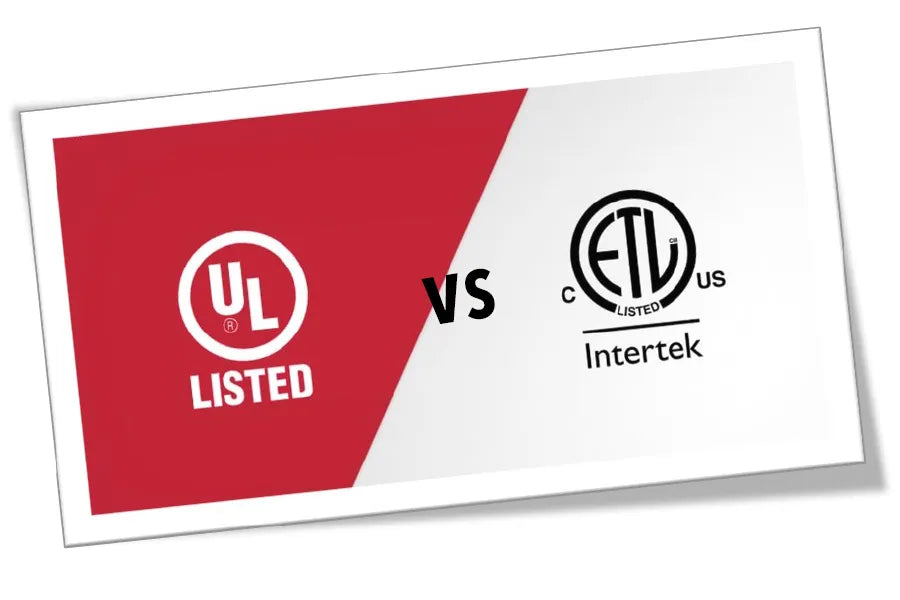
When purchasing electrical products, you've likely seen markings such as UL Listed or ETL Listed on product packaging, specification sheets, and catalogs. Contractors, inspectors, distributors, and supply houses often ask the same question:

Is UL better than ETL?
The short answer is no.
Both UL and ETL certifications indicate that a product has been independently tested and meets applicable safety standards. Understanding what these certifications mean can help contractors make informed purchasing decisions and ensure products pass inspection without issue.
What Does "Listed" Mean?
A "listed" product has been evaluated by a nationally recognized testing laboratory (NRTL) and found to comply with specific safety standards.
In the United States, the Occupational Safety and Health Administration (OSHA) recognizes several NRTLs that are authorized to test and certify products.
Two of the most common certifications found in the electrical industry are:
- UL Listed
- ETL Listed
Both marks indicate that the product complies with the same applicable safety standards.
What Is UL?
UL Solutions is one of the oldest and most recognized safety certification organizations in North America.
Founded in 1894, UL developed many of the safety standards that are still used throughout the electrical industry today.
A product carrying a UL Listing Mark has been tested to the applicable UL standard and is subject to ongoing factory inspections to ensure continued compliance.
Because UL has been around for over a century, many contractors and inspectors immediately recognize the UL mark.
What Is ETL?
Intertek operates the ETL certification program.
The ETL mark traces its roots back to Thomas Edison's original testing laboratories and is now one of the largest testing and certification organizations in the world.
An ETL Listed product is tested to the exact same safety standards used for UL certification.
In fact, many products are tested to UL standards but receive an ETL certification mark instead.
Is UL Better Than ETL?
This is probably the most common question we hear at Sonic Electric.
No. UL is not inherently better than ETL.
Both organizations are OSHA-recognized Nationally Recognized Testing Laboratories (NRTLs), and both certify products to the same safety requirements.
If a product is UL Listed or ETL Listed, it has been evaluated against the same applicable standards.
Think of it this way:
- UL and ETL are testing organizations.
- The safety standard is what matters.
- Both organizations verify compliance with those standards.
For inspectors and code compliance purposes, an ETL Listed product is generally accepted the same way a UL Listed product is.
Why Do Some Manufacturers Choose ETL Instead of UL?
Manufacturers choose certification partners for several reasons:
Faster Certification Timelines
Many manufacturers find ETL certification can provide shorter lead times when bringing new products to market.
Cost Efficiency
Certification and ongoing compliance costs can vary between testing organizations.
Product Expansion
Companies introducing large numbers of new SKUs often use ETL testing because it allows them to certify products efficiently while maintaining compliance.
The certification body itself does not make the product safer or higher quality. The quality of the product depends on:
- Design
- Materials
- Manufacturing controls
- Quality assurance processes
What Do Electrical Inspectors Look For?
Most inspectors are concerned with one thing:
Is the product listed by a recognized NRTL?
Inspectors typically verify:
- Listing mark present
- Proper application
- Correct installation
- Compliance with NEC requirements
In most jurisdictions, both UL and ETL listed products are accepted without issue.
Why This Matters to Contractors and Supply Houses
Electrical contractors face increasing pressure to manage labor costs, material costs, and project timelines.
Limiting purchases only to products carrying a specific certification logo can unnecessarily reduce available options.
A better approach is to evaluate:
- Certification status
- Product quality
- Availability
- Lead times
- Pricing
- Manufacturer support
When all other factors are equal, an ETL Listed product can provide the same code compliance and safety performance as a UL Listed alternative.
Common Myths About UL and ETL
Myth #1: UL Products Are Safer
False.
Both UL and ETL certifications verify compliance with the same applicable safety standards.
Myth #2: ETL Products Won't Pass Inspection
False.
ETL is an OSHA-recognized NRTL, and ETL Listed products are generally accepted by inspectors nationwide.
Myth #3: UL Means Higher Quality
False.
Certification verifies compliance with safety standards. Product quality depends on manufacturing, engineering, and quality control—not the logo on the label.
The Bottom Line
When evaluating electrical products, focus on the factors that truly impact your project:
- Is the product listed by a recognized NRTL?
- Does it meet the applicable standard?
- Is it available when you need it?
- Does it offer the features required for the installation?
- Is the manufacturer reputable and responsive?
Both UL Listed and ETL Listed products are independently tested, certified, and accepted throughout the electrical industry.
For contractors, distributors, and supply houses, understanding this distinction can expand product options, improve availability, and help reduce costs without sacrificing safety or code compliance.
At Sonic Electric, we proudly supply a wide range of ETL and UL certified products, including Malibu's growing portfolio of contractor-focused electrical solutions designed to meet today's installation requirements while delivering reliable performance in the field.
Share:
200 Amp Service Upgrade Kit Guide: What’s Included, When You Need It & Why Electricians Choose It
NEC 314.20 Explained: When Are Box Extenders Required and Why Every Electrician Should Care