

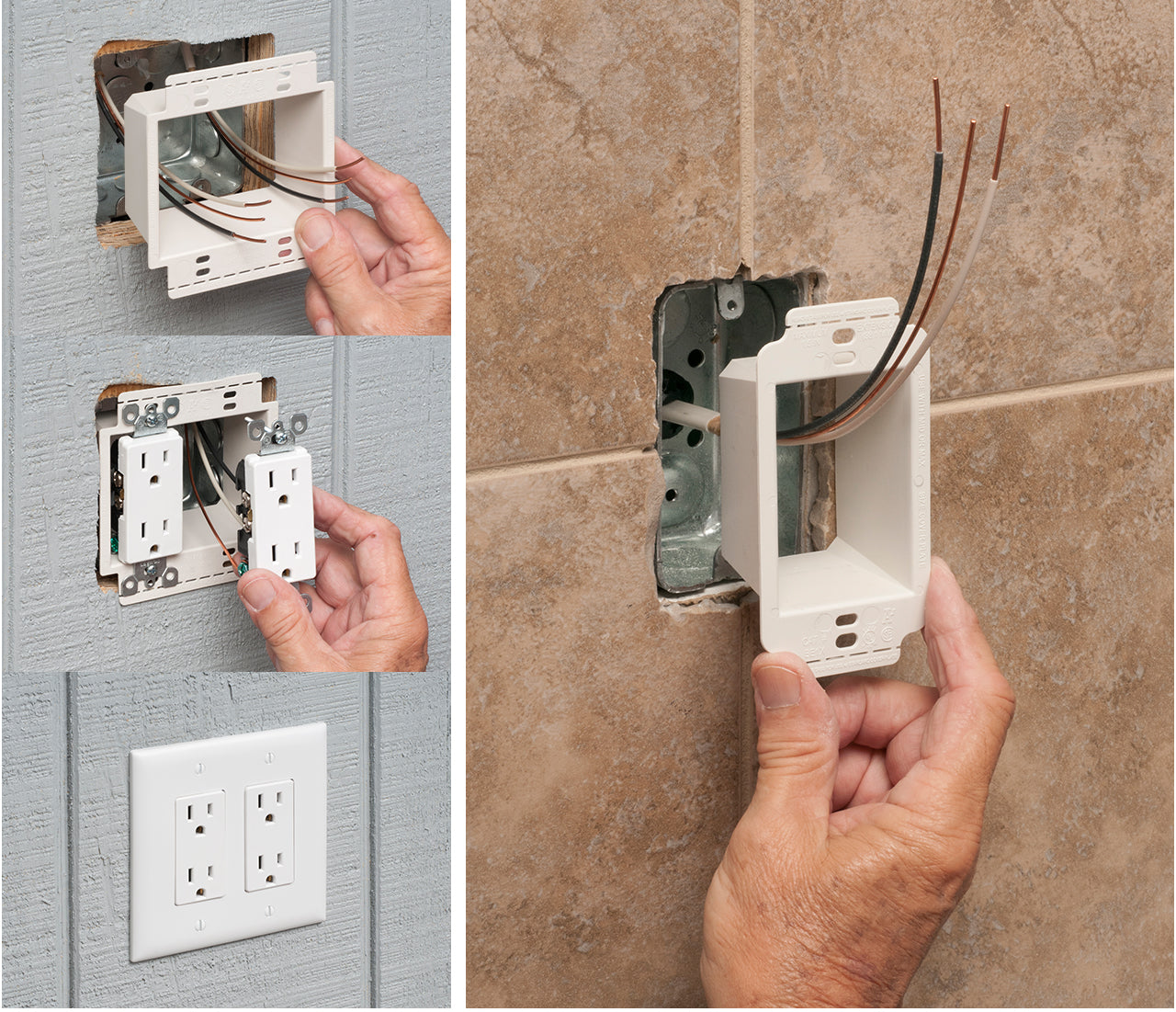
Understanding NEC 314.20 and the Importance of Electrical Box Extenders
One of the most commonly overlooked electrical code requirements during remodeling, tile installation, paneling, drywall replacement, and finish work is the proper placement of electrical boxes relative to finished wall surfaces.
The National Electrical Code (NEC) addresses this issue in NEC 314.20, which establishes requirements for outlet boxes, device boxes, junction boxes, and conduit bodies installed in combustible and noncombustible surfaces.
Failure to comply can create fire hazards, loose devices, damaged conductors, failed inspections, and costly rework.
Fortunately, electrical box extenders provide a simple and code-compliant solution.
= What Does NEC 314.20 Say?
NEC 314.20 requires electrical boxes to be installed so that the front edge of the box is flush with or projects from the finished surface.
For installations in combustible surfaces such as wood paneling, the box must be flush with the finished surface.
For noncombustible surfaces such as drywall, tile, concrete, brick, or plaster, the box may be recessed up to 1/4 inch.
When a box is recessed beyond these limits, a listed box extender must be installed to bring the box opening flush with the finished wall surface.
Why This Matters
When electrical devices are mounted in a recessed box:
- Sparks or arcing may occur outside the enclosure.
- Heat can build up around combustible materials.
- Devices may become loose over time.
- Wiring may become stressed or damaged.
- Installations may fail electrical inspections.
Box extenders eliminate these issues by restoring the box opening to the proper depth.
Common Situations That Require Box Extenders
Electrical box extenders are frequently used during:
Tile Installations
Adding ceramic, porcelain, marble, or stone tile often increases wall thickness and leaves existing boxes recessed too deeply.
Kitchen Remodels
Backsplashes commonly create box setback issues around receptacles and switches.
Bathroom Renovations
Tile and decorative wall finishes often require electrical box extensions.
Wood Paneling
Adding decorative wood paneling can place boxes behind combustible materials, creating a direct NEC 314.20 violation.
Drywall Over Existing Surfaces
Additional drywall layers can recess electrical boxes beyond allowable limits.
Commercial Tenant Improvements
Wall coverings, FRP panels, decorative finishes, and renovations frequently require box extensions to maintain compliance.

Benefits of Using Listed Box Extenders
Using a listed box extender provides several advantages:
Code Compliance
Helps meet NEC 314.20 requirements.
Improved Fire Safety
Keeps wiring and connections enclosed within a protective electrical box.
Better Device Support
Provides solid support for switches, receptacles, USB outlets, GFCI devices, dimmers, and smart devices.
Cleaner Installation
Creates a professional finished appearance without gaps around devices.
Faster Inspection Approval
Inspectors frequently check box depth during rough and final inspections.
Malibu Box Extenders: A Simple Solution for NEC 314.20 Compliance
Malibu Manufacturing offers a complete line of non-metallic box extenders designed to help electricians quickly bring recessed boxes back to code-compliant depth.

Malibu PBE1 – One-Gang Box Extender
The Malibu PBE1 is ideal for:
- Standard receptacles
- Light switches
- GFCI outlets
- Smart switches
- USB receptacles
Applications include residential remodels, tile installations, and wall panel upgrades.

Malibu PBE2 – Two-Gang Box Extender
The Malibu PBE2 accommodates:
- Double switches
- Switch and receptacle combinations
- Dual GFCI installations
- Smart home controls
Ideal for kitchens, bathrooms, and commercial spaces.

Malibu PBE3 – Three-Gang Box Extender
The Malibu PBE3 is designed for larger device groupings, including:
- Triple switch assemblies
- Multi-control stations
- Lighting control systems
Perfect for modern residential and commercial installations.
Malibu PBE4 – Four-Gang Box Extender
The Malibu PBE4 provides extension capability for:
- Multi-device control centers
- Commercial switching stations
- Home automation systems
- Large device clusters
When wall finishes create excessive setback, the PBE4 helps restore compliance quickly.
Can You Use Longer Screws Instead of a Box Extender?
No.
Using longer device screws does not correct the code issue.
NEC 314.20 addresses the position of the electrical box itself, not merely the mounting of the device.
A box extender restores the enclosure integrity required by the National Electrical Code and provides proper support for the device.
Are Box Extenders Required During Inspections?
If an electrical box is recessed beyond the limits allowed by NEC 314.20, most inspectors will require correction before approval.
Installing a listed box extender is often the fastest and most cost-effective solution.
Do Box Extenders Increase Box Fill Capacity?
Generally, no.
Most box extenders are intended to restore box depth and enclosure integrity, not increase conductor fill calculations.
Always verify the listing and manufacturer's specifications when considering box fill requirements.
Best Practices for Electricians
When installing box extenders:
- Verify wall thickness before device installation.
- Use listed products from reputable manufacturers.
- Ensure the extender is flush with the finished surface.
- Confirm device mounting screws fully engage.
- Check box fill requirements separately.
- Follow all manufacturer instructions.
Why Electrical Contractors Keep Box Extenders on Their Trucks
Experienced electricians encounter recessed boxes almost daily.
Whether working on:
- Kitchen remodels
- Bathroom renovations
- Tile installations
- Commercial tenant improvements
- Paneling projects
- Drywall overlays
having Malibu Box Extenders readily available can save time, avoid failed inspections, and deliver a safer installation.
Frequently Asked Questions (FAQ)
What is NEC 314.20?
NEC 314.20 is a National Electrical Code requirement that regulates how electrical boxes must be positioned relative to finished wall surfaces.
When do I need a box extender?
You need a box extender when an electrical box is recessed deeper than permitted by NEC 314.20 after installation of drywall, tile, wood paneling, stone, or other wall finishes.
Are box extenders code compliant?
Yes, when using a properly listed box extender installed according to manufacturer instructions.
Can I use spacers instead of a box extender?
No. Spacers do not restore the electrical enclosure required by NEC 314.20.
Are box extenders required behind tile?
Often yes. Tile installations frequently recess electrical boxes beyond allowable code limits.
Can a recessed electrical box be a fire hazard?
Potentially. Recessed boxes can expose combustible materials to heat or arcing outside the enclosure.

What sizes of Malibu Box Extenders are available?
Malibu offers:
- PBE1 One-Gang Box Extender
- PBE2 Two-Gang Box Extender
- PBE3 Three-Gang Box Extender
- PBE4 Four-Gang Box Extender
- PBER Round Box Extender
Do box extenders work with GFCI outlets?
Yes. Malibu Box Extenders can be used with standard receptacles, GFCI outlets, switches, dimmers, and smart devices when installed properly.
Shop Malibu Box Extenders at Sonic Electric
Whether you're correcting a recessed outlet after a tile installation or bringing an entire remodel up to NEC standards, Malibu Box Extenders provide a fast, professional, and code-compliant solution.
Available in one-gang through four-gang configurations, Malibu box extenders help electricians save time, pass inspections, and deliver safer installations that meet NEC 314.20 requirements.


Share:
UL Listed vs. ETL Listed: What’s the Difference and Does It Matter?
Sonic Introduces New Regional Free Shipping Thresholds