

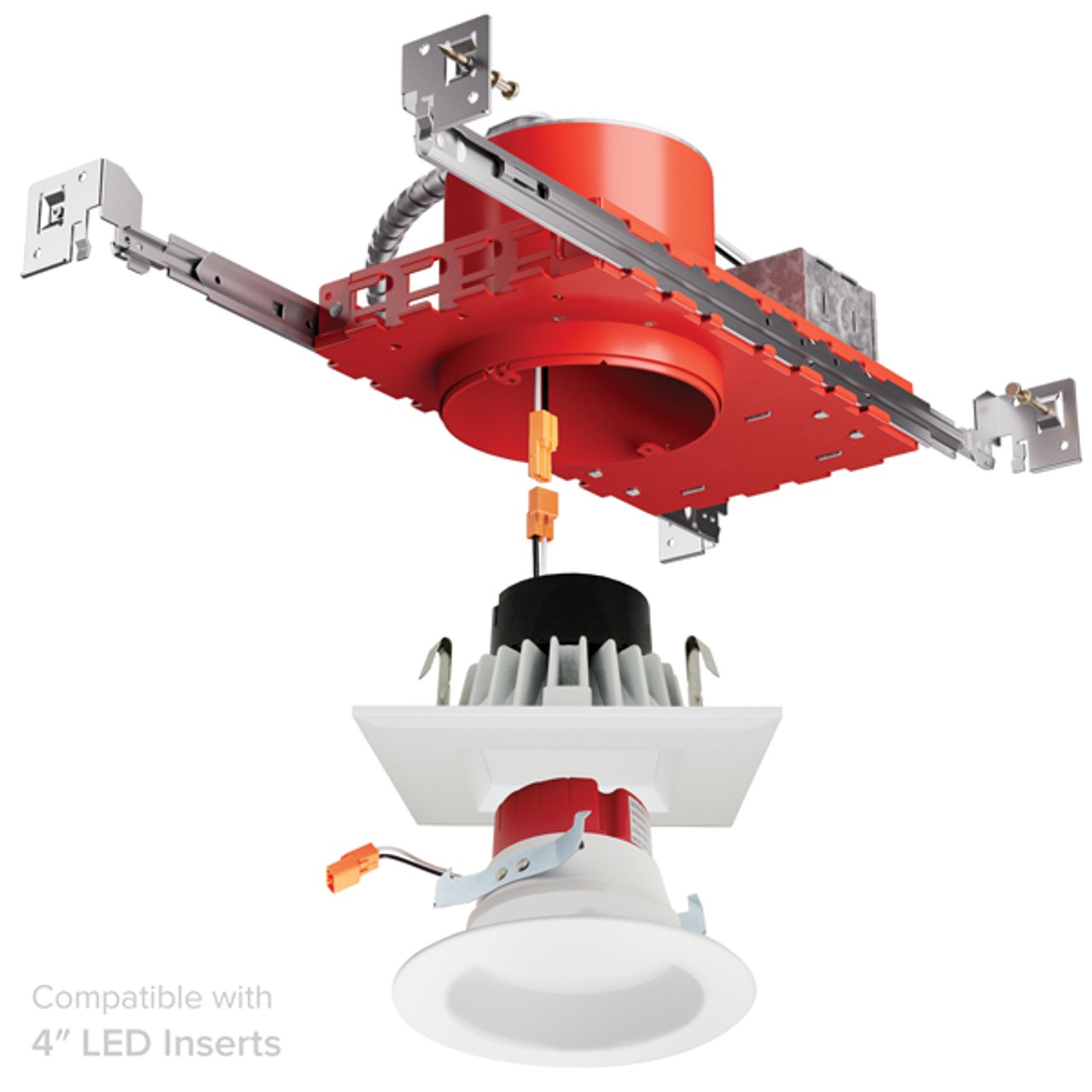
Keep your home or business safe with our 2-Hour Fire Rated Recessed Housing. Available in 4 inch or 6 inch for new construction.
To help prevent electrical fires and protect your property and its occupants, you should consider using fire rated new construction housing for your home or business. These specially designed enclosures are built to resist fire and prevent it from spreading to other areas of the building. Here are some key things to know about fire rated new construction housing for electrical:
- Fire rated enclosures are rated based on their ability to resist fire. The rating system is based on the length of time the enclosure can withstand fire and keep it from spreading. For example, a 2-hour rated enclosure is designed to withstand fire for two hours before it fails and allows the fire to spread.
- Enclosures are typically made of metal, such as steel or aluminum. This is because these materials are more resistant to fire than other types of materials, such as plastic.
- Fire rated enclosures can be used to protect a variety of electrical components, including circuit breakers, electrical panels, and wiring. The type of enclosure you need will depend on the specific component you're protecting and the level of fire protection you require.
- These enclosures are often required by building codes and regulations, especially in commercial properties. However, even if they're not required, they're a smart investment to help protect your property and its occupants.
When it comes to fire safety, it's always better to be safe than sorry. By using fire rated new construction housing you can help prevent electrical fires and protect your property and its occupants. Be sure to work with a qualified electrician or contractor who can help you choose the right type of enclosure for your needs and ensure that it's installed correctly.
Share:
Smoke & Carbon Dioxide Alarms
Elevating Electrical Installations with Malibu's Liquid Tight Conduit and Connectors